



Personal Branding
How To Do Personal Branding For Beginners?
In today’s digital age, whether you’re launching a business, searching for a job, or building a creative career, one phrase will keep popping up: personal branding. Why? Because who you are online and offline has never been more critical. In fact, recent surveys show that nearly 90 percent of people believe a strong professional brand is key to career success. That means if you’re a beginner in any field, developing your personal brand is one of the smartest moves you can make. It’s how you stand out in a crowded marketplace and ensure your reputation works for you, not against you.
But what exactly is personal branding for beginners? Simply put, personal branding is the process of creating a unique identity for yourself as an individual by highlighting your values, skills, and personality to distinguish you from others. Think of it as crafting and marketing the product called You. As experts explain, every time you apply for a job or pitch a client, you are essentially marketing yourself, so it pays to be intentional about how you express your own value proposition. In other words, personal branding is about defining how you want others to see you and making sure that impression is accurate, compelling, and consistent.
This comprehensive guide will walk you through tips for personal branding success from the ground up. We’ll cover why branding yourself is important, actionable steps to build your brand from scratch, real world examples of people who grew their personal brands, and how you can leverage expert help. By the end, you’ll have a clear roadmap to create a personal brand that opens doors and helps you reach your goals.
What is Personal Branding? (The Basics)
Before diving into strategy, let’s clarify the concept. Personal branding is more than a buzzword; it’s the art of shaping your public persona. It involves defining who you are and communicating it in a way that resonates with your target audience. Unlike a business brand which promotes a company or product, your personal brand centers on you. It focuses on your unique qualities, expertise, and the value you offer.
At its core, personal branding comes down to a few key elements. Your reputation and credibility involve what you are known for and what people say about you when you are not in the room. Your unique value proposition covers the skills or insight you bring to the table and the problems you can solve. Your values and personality define what you stand for and how you express it, whether you are innovative and bold or empathetic and collaborative. Finally, your online presence dictates how you present yourself on LinkedIn, social media, or personal websites. In today’s world, if someone searches for you and finds nothing or an inconsistent image, that is your brand, and it is likely not a good one.
Importantly, personal branding is an intentional process. Many career coaches suggest that you already have a personal brand whether you know it or not through the sum of your interactions and online footprint. Rather than leaving it to chance, it’s better to consciously define and shape that brand to reflect your best self. This is especially true for beginners because you have an opportunity from the start to craft how you will be perceived in your industry or area of interest.
Why Branding Yourself is Important: Psychology Behind Effective Personal Branding
If you’re new to the idea, you might be asking yourself why personal branding is important for your career or business. The short answer is that a strong personal brand can unlock opportunities that would otherwise pass you by. There are several key reasons why branding yourself is important no matter your field.
Personal branding helps you stand out in a crowded market. In an era where everyone has a degree or a portfolio, your brand highlights what makes you different. Employers and clients often sift through hundreds of profiles, and a clear personal brand ensures you are memorable. Especially for fresh graduates or newbies, your brand can give you a distinct edge over others with similar credentials.
A well crafted brand also builds trust and credibility. When people see a consistent and professional presence across your resume, social media, and communication, they are more likely to trust you. This trust is crucial for entrepreneurs seeking customers and for job seekers trying to impress hiring managers. Research suggests that a candidate’s online reputation significantly influences hiring decisions, meaning a positive brand can directly impact your career.
Furthermore, a strong brand helps you attract opportunities. When you intentionally promote your strengths and passions, you start drawing in offers that align with your goals. Think of your personal brand as a magnet that can attract job offers, collaborations, or speaking engagements. By becoming known for a specific niche, you may be sought out for projects in that area or even earn internal promotions by being the go-to person for a specific skill.
Branding also allows you to expand your network. When you clearly communicate your identity, like-minded people take notice. A distinctive brand helps you connect with mentors, peers, and industry leaders. For beginners, this means you can start building relationships based on your ideas and personal story even if you currently lack deep experience.
Finally, the process of branding encourages personal growth and confidence. By articulating your strengths and values, you reinforce them internally. Many people find that defining their brand gives them a clearer sense of direction and helps decrease imposter syndrome. In today’s world, everyone has a digital footprint. If you do not brand yourself, others will do it for you. Personal branding lets you manage your reputation proactively and control your own narrative from the very start.
Different Fields, Same Importance
No matter your path, personal branding matters. For entrepreneurs, your personal brand can humanize your business and build customer trust. People often want to follow and buy from founders who stand for something. Clients often invest in you just as much as they invest in your product. Think of how bold, innovative personas amplify attention for their companies or how energetic leaders become magnets in the marketing world.
For job seekers and professionals, a strong brand could be the deciding factor in getting hired or promoted. Hiring managers will search your name, and a professional LinkedIn profile, a personal website, or industry related content can make you a more compelling candidate than someone who just submits a plain resume. On the flip side, a lackluster online presence or unflattering posts can knock you out of the running. A well crafted personal brand significantly increases your chances of landing a job because it demonstrates intentionality and professionalism beyond a simple list of past roles.
Students and graduates might think personal branding is only for established professionals, but it is actually about setting the stage for future opportunities. For example, a college student who starts a design blog or shares project updates on social media is already building credibility. By graduation, they are far ahead of peers who did not cultivate a brand. Most job seekers believe that a strong personal brand boosts prospects, and even scholarship committees or academic programs take note of a student's online presence and personal initiatives nowadays.
Creatives and freelancers often are their brand. If you are a photographer, graphic designer, or content creator, your personal brand helps you attract an audience and clients who love your specific style. It is how you differentiate your work and build a loyal fan base. Consider popular social media influencers whose entire careers are built on their personal brand. Whether through a consistent comedic gimmick or an authentic artistic style, branding allows creatives to turn their identity into a career. Branding is not just for corporate environments; it is equally crucial for creative paths.
How to Build Your Personal Brand from Scratch (Step-by-Step)

Now that we’ve covered the what and why, let’s get into the how. Building personal branding for beginners might feel overwhelming, but it does not have to be. There are actionable steps and tips for personal branding that you can start implementing today.
The first step is self reflection to define your brand purpose and values. Every strong personal brand starts with knowing yourself. Take time to clarify the core of who you are and what you want to be known for. Ask yourself what your strengths, skills, and talents are. Consider what values and passions drive you, what niche you want to be in, and what impact you aim to have. The answers to these questions form your brand’s foundation. For example, you might realize you are a marketing professional passionate about sustainability and innovation, which is a perfect theme to build on. Write down a short personal mission statement or a list of key traits. This clarity will guide everything else. Authenticity is key, so do not position yourself as something you are not. Be genuine about your aspirations and style.
Next, you must identify your target audience. Just like a business needs to know its customers, you should know who you want your personal brand to speak to. This might be recruiters in a certain industry, potential clients, investors, or followers in a creative community. Knowing your audience helps you tailor your message. Your goal is to become visible to the right people. If you are job hunting, your audience might be hiring managers. If you are an entrepreneur, your audience might be customers and industry thought leaders. Identifying your audience will also help you determine which platforms to focus on. For instance, designers might showcase their work on Instagram, while business analysts might focus on LinkedIn.
Once you know your strengths and audience, craft your personal brand message. This includes your personal brand statement or tagline, which is a concise sentence that encapsulates who you are and what you do. This is your unique selling proposition. Alongside a tagline, think about your broader story. People remember stories more than facts. Even as a beginner, you have a story involving your academic journey, a challenge you overcame, or a hobby that led to your passion. Weave that narrative into your branding materials, such as an About Me section on your website or the summary section on LinkedIn. A compelling story makes your brand human and relatable.
Finally, you need to polish and optimize your online presence. Before anyone meets you in person, they will likely meet you online. Start by searching your name online to see what comes up. Check your social media through the eyes of a potential employer or client and remove any old posts that could give the wrong impression. Consistency is crucial, so ensure your public profiles have a cohesive tone and up to date information. Use a professional looking photo and be mindful of your bio. Anything you post online contributes to what people perceive as your brand, so make it count.
You should also optimize your profiles for searchability. On LinkedIn, use keywords in your headline and summary that recruiters might search for, such as specific skills and industry terms. If you have a common name, consider adding a middle initial or a credential to distinguish yourself. You might also create a simple personal website or portfolio. A website under your name can serve as a controlled hub for your brand where you can showcase work samples like designs, writing clips, or project case studies. The goal for your digital presence is to be clean, consistent, and professional. This does not mean hiding your personality; it just ensures that your online footprint aligns with the image you want to cultivate.
Showcase Your Expertise (Content and Engagement)
You’ve defined your brand and cleaned up your profiles; now it’s time to put yourself out there. One of the most effective personal branding strategies is content creation. By sharing useful, relevant content, you position yourself as a knowledgeable and passionate voice in your niche. This could mean writing LinkedIn articles or blog posts, making videos, posting industry insights, or even creating projects that reflect your skills. For example, if you’re a web developer, you might write a post on building your first website. If you’re a marketing beginner, you could start a blog analyzing clever campaigns. Content can be small scale too. Sharing curated articles with your brief commentary on LinkedIn shows you’re engaged in your field. The key is to offer value to your target audience by educating, inspiring, or informing them rather than just talking about yourself.
Consistency is more important than volume. Decide on a schedule you can manage, perhaps one blog post a month or three social media posts a week, and stick to it. Over time, this builds a body of work associated with your name. As an added bonus, content gives people something to talk to you about and share with others, expanding your reach. When your content resonates, you’ll start to become known for those topics. Many globally recognized marketing gurus grew their brands from small beginnings simply through consistent content and engagement.
Don’t forget to engage with others’ content too. Personal branding is a two-way street. Comment on industry discussions, answer questions in forums, or participate in groups relevant to your field. This not only increases your visibility but also shows you’re a community contributor, not just self promoting. Plus, you learn a lot and make valuable connections in the process.
Be Consistent – Visually and Verbally
Branding is about recognition, so consistency is key. Use a consistent tone and voice in your communications. If your brand is friendly and humorous, let that shine in your posts and even in how you write emails. If it’s more analytical and formal, that’s fine too; just be consistent so people know what to expect from you. The same goes for visual elements. You might use a particular color palette or style on your personal website and social media graphics. Professional headshots or a signature look can become part of your personal brand. This doesn’t mean you need a logo or corporate level branding kit; it simply means aligning the look and feel of your materials. If someone glances at your social media banner and your website, there should be a cohesive vibe. This consistency builds familiarity so that over time, your network will instantly recognize content coming from you.
Consistency also applies to your message. Remember that personal brand statement and those key values you defined earlier. Keep reinforcing those. Repetition helps solidify your brand in others’ minds. For example, if one of your brand themes is innovation, weave that into your narratives regularly. Share innovation tips, mention it in your bio, and talk about it in interviews. Over time, people will associate you with that concept.
Network and Collaborate (Grow Your Presence)
Building a brand doesn’t happen in isolation. Actively networking is crucial, especially for beginners who don’t have a huge following yet. Leverage both online and offline opportunities to connect with people in your industry. Online, this means sending thoughtful connection requests with a personalized note, joining professional communities, and interacting with influencers or peers by commenting on their posts. Be genuine and look to build relationships, not just take. Something as simple as regularly engaging with a well known person’s content can put you on their radar over time.
Offline, attend industry events, workshops, webinars, or local meetups. Have your personal elevator pitch ready. Networking not only leads to direct opportunities like a referral or collaboration, but it also reinforces your brand identity. When you consistently show up and talk about your niche or passion, people start seeing you as the go to person for that topic. For example, if you’re building a brand as a young graphic designer, volunteer to design a flyer for a community event. These acts get your name out there. Also, don’t overlook networking with like minded beginners as you can support each other’s growth. As your network expands, so does the reach of your personal brand.
Keep Learning and Adapting (Brand Evolution)
Personal branding isn’t a one and done task; it’s an ongoing process. Especially in the early stages, be prepared to learn and adapt. Pay attention to feedback and how people respond. Which blog post got the most positive reactions? What do colleagues or mentors say they appreciate about you? Use that input to refine your brand messaging. Maybe you discover a certain topic you wrote about that really struck a chord, so consider focusing more there.
It’s also wise to keep improving your skills. Your personal brand will gain strength as your expertise grows, so invest in courses, certifications, or projects that build your capabilities. Document these developments in your branding by updating your bio or sharing what you learned in a post. Additionally, stay updated on best practices like basic search engine optimization so that your personal website has a better chance of appearing in search results. The more discoverable you are, the more your brand can grow.
Lastly, don’t be afraid to pivot as you figure things out. Many people start in one niche and find their brand evolves with their interests or market demand. That is okay, just ensure you communicate any shifts to your audience so your brand stays coherent. Think of your personal brand as a living, evolving asset that grows with you.
Real-World Personal Branding Examples (Get Inspired)
To solidify these ideas, let’s look at a few real world examples of personal brands. These individuals started at zero like any beginner, but by consistently applying personal branding principles, they became influential names. You do not have to be exactly like them, but you can certainly learn from their journeys.
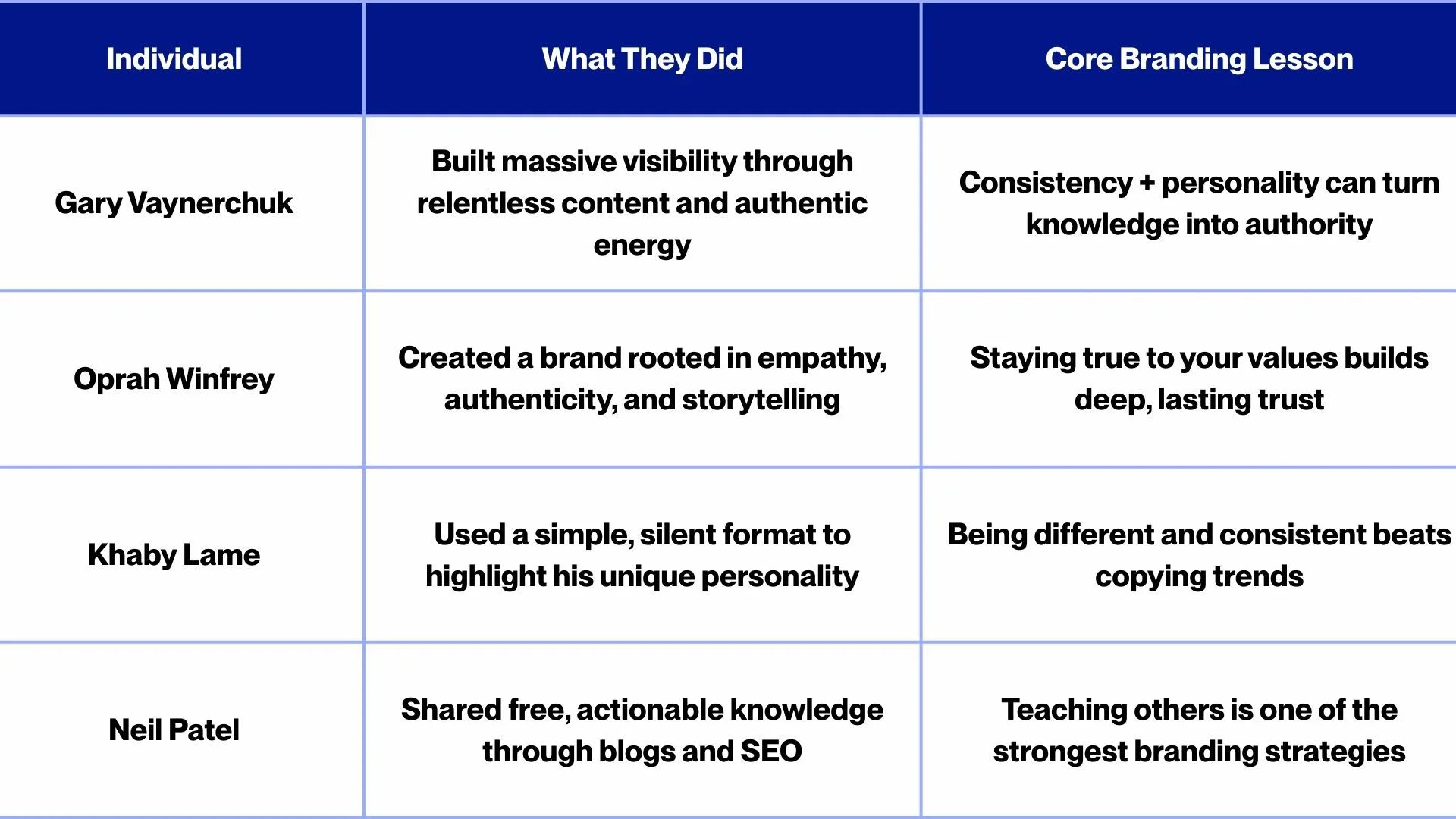
Gary Vaynerchuk is a great example of a content powerhouse. He began by helping his family’s wine business and started making YouTube videos. Through relentless content creation and an authentic, energetic style, he grew a massive following and positioned himself as a marketing and entrepreneurship expert. Today, his personal brand is synonymous with hustle and bold business advice. His story shows how sharing your knowledge generously and being yourself can turn you into a go-to authority.
Oprah Winfrey is often cited as a personal branding icon. She cultivated a brand of empathetic, empowering communication that resonated with millions. Starting as a TV news anchor from humble beginnings, Oprah built her image around authenticity, warmth, and inspirational storytelling. Her brand feels approachable yet authoritative, which makes her relatable across age groups. The takeaway here is that being genuine and sticking to your core values builds immense trust and a timeless personal brand.
Khaby Lame rose to fame on social media essentially by not speaking. This young creator responded to outrageous life hack videos with silent, deadpan expressions that suggested a simpler way of doing things. It was a simple concept, but he did it consistently and in a way that highlighted his witty personality. Within a couple of years, he became one of the most followed creators globally. For beginners, his story shows that leaning into what makes you different can be more powerful than trying to copy others.
Neil Patel started as a young digital marketer hungry to share knowledge. He began blogging actionable marketing tips and personal branding case studies on his personal website, leveraging search engine optimization to get his name out there. By consistently offering free value through blog posts and tools, he built a reputation as a trusted resource in a crowded field. His journey underscores the value of teaching others as a branding strategy because if you help people solve problems, they will remember you.
Leverage Experts: Personal Branding Agencies for Beginners
Building a personal brand is absolutely something you can do on your own, but you do not have to go it alone. Just as startups might hire branding agencies to craft a company image, individuals can seek help from personal branding agencies for beginners to fast track their journey. If you are feeling overwhelmed or want professional guidance, this could be a smart option.
A personal branding agency can bring expertise in areas like crafting your personal narrative, optimizing your profiles, and developing a content strategy. They have experience in what works and what does not, saving you a lot of trial and error. As a beginner, you might not be sure how to pitch yourself, and agencies can help hone that message and present it in the best light.
OhhMyBrand is one such agency specialized in personal branding for newcomers. Their team has extensive experience turning unknown individuals into recognized brands in their field. They understand the challenges beginners face, such as not having a lot of experience or confidence, and they know how to highlight your strengths to position you competitively. Working with a trusted agency means you get a structured plan and a polished brand presence crafted by professionals. It is like having a branding mentor by your side ensuring you put your best self forward from day one.
Conclusion and Next Steps
Personal branding for beginners might sound intimidating, but it boils down to telling your story and showcasing your value in a consistent, strategic way. It is about proactively shaping your reputation so that the right people and opportunities find their way to you. Whether you are aiming to become the next industry thought leader or simply want to land a better job, investing in your personal brand is investing in your future.
Ready to kickstart your personal brand journey? Do not leave your professional image to chance. Take the first step by implementing the tips above, and if you need guidance, OhhMyBrand is here to help. With specialized expertise for beginners, you can gain personalized strategies and support to build an impactful brand from scratch. Contact OhhMyBrand today to learn more about how to transform your name into a brand that opens doors. Let’s work together to make you not only visible but unforgettable in your field.


.svg)
.svg)
.svg)
.svg)



.svg)