



Personal Branding For Tech Professionals
How To Build Personal Branding For Tech Professionals?
Personal branding is no longer just a buzzword; it is a career necessity for anyone in technology. At OhhMyBrand, we define personal branding as your professional reputation and identity, both online and offline. It is how colleagues, recruiters, and industry peers perceive you. For tech and IT professionals, a strong personal brand can be a game-changer. It helps you stand out in a crowded field of engineers, developers, and analysts, opening doors to new opportunities.
Whether you are a software developer, system analyst, or IT manager, cultivating your brand is about showcasing who you are beyond your resume. It is the sum of your skills, values, and the unique value you bring, all communicated in a clear and consistent way. In this guide, we will explore personal branding for tech professionals, why it matters, and how to build it.

Why Personal Branding Matters for IT Professionals
Think about how recruiters find candidates today. They search online and skim LinkedIn profiles before ever making contact. In fact, most recruiters use LinkedIn to scout talent, so having a distinct personal brand ensures you are easily found and remembered. For example, an IT specialist with a well-crafted profile and unique expertise will distinguish themselves from the crowd, whereas a blank or generic presence might be overlooked. Many employers are less likely to interview a candidate with no online presence. If a recruiter or client cannot find any trace of you, they might not consider you at all. A strong personal brand acts as your always-on recruiter, helping opportunities find you.
Your personal brand communicates what you do and what you are about, making it easier for like-minded professionals to connect with you. When someone lands on your profile or hears about you, they should immediately grasp your specialty and interests. This clarity helps you network more effectively because people know who you are and how to engage with you.
At OhhMyBrand, we believe personal branding uses bold ideas and sharp strategy to position you as a go-to expert. The result is that you will find it easier to strike up conversations at meetups or on developer forums because your reputation precedes you. In short, a clear personal brand attracts peers, mentors, and collaborators who share your professional passions.
First impressions in the tech world are not just made in person; they are made via search engines and profile views. Everyone you meet, from interviewers to conference attendees, will form an opinion about you. Personal branding for IT professionals is about proactively shaping that opinion. Rather than leaving things to chance, you can highlight the qualities and achievements you are proud of.
For instance, showcasing that you are a full-stack developer who contributes to open source or an AI engineer passionate about ethical tech helps others remember you for the right reasons. This can lead to referrals, job offers, or partnerships because you have made a positive, lasting impression. Trust is currency in any industry, and people are more likely to trust someone with an established personal brand. By cultivating your brand, you build credibility that makes others comfortable hiring you or doing business with you.
A strong personal brand can fast-track your tech career growth in ways that pure technical skills might not. When you are known for something, such as being a cloud computing expert who blogs about DevOps trends, opportunities start coming to you. You might be invited to speak on a panel, lead a project, or join an exciting startup because people recognize your name and associate it with expertise. In contrast, without a brand, you remain invisible and may miss out on roles even if you are highly qualified. Even small personal branding efforts can yield big returns over time. For example, simply keeping an up-to-date LinkedIn profile makes you far more likely to receive unsolicited job leads than if you had no online footprint at all. In essence, your personal brand works for you constantly, quietly marketing your skills and making that next career step easier to land.
Common Myths About Personal Branding in Tech
Tech professionals sometimes hesitate to promote themselves, so it is important to dispel a few myths upfront. One common misconception is that you have to be a blogger or influencer. This is false. You do not need to start a YouTube channel or write daily blog posts to have a personal brand. Your brand can be as simple as a well-crafted LinkedIn profile and a consistent professional presence. Many successful IT professionals rarely post on social media, and that is perfectly fine. It is about quality and clarity rather than volume.
Another myth is the idea that you need thousands of followers. This process is not about fame or becoming the next tech celebrity. Even with a modest network, a strong personal brand ensures the right people, such as hiring managers or industry peers, know about you. It is better to be respected by a niche community, like Python developers who read your answers on Stack Overflow, than to have random internet fame. At OhhMyBrand, we emphasize authenticity over popularity because you are not trying to win a popularity contest; you are showcasing your real value.
Some feel that personal branding is egoistic or self-promotional. This is not the case if it is done correctly. Promoting your work and sharing achievements might feel like bragging to those in tech who are more introverted, but highlighting your strengths is about letting opportunities find you. As long as you stay genuine and avoid exaggerated claims, building your brand is a professional development activity rather than a project of vanity. You can be humble and still maintain a personal brand by remaining authentic and value-driven in what you share.
Finally, many believe you have to be charismatic or extroverted to build a brand. This is absolutely not true. You do not need to become a motivational speaker if that does not suit your personality. Even a quiet engineer can build a compelling brand by being themselves. In fact, some of the most respected tech personal brands belong to people who are straightforward or reserved, letting their work speak for them. Your brand can showcase your analytical nature, your love of problem-solving, or whatever makes you unique. In personal branding, authenticity beats flashiness every time.
By busting these myths, it becomes clear that personal branding for technology professionals is accessible to everyone. It is not reserved for CEOs, extroverts, or those with a lot of free time. Next, we will dive into how you can start building your own brand step by step.
How to Build a Strong Personal Brand as a Tech Professional
Building your personal brand might sound abstract, so it is helpful to break it down into clear, doable steps. Whether you are an IT specialist, a software engineer, or a tech consultant, these strategies will help you create a brand that truly represents you.
Define Your Niche and Unique Value
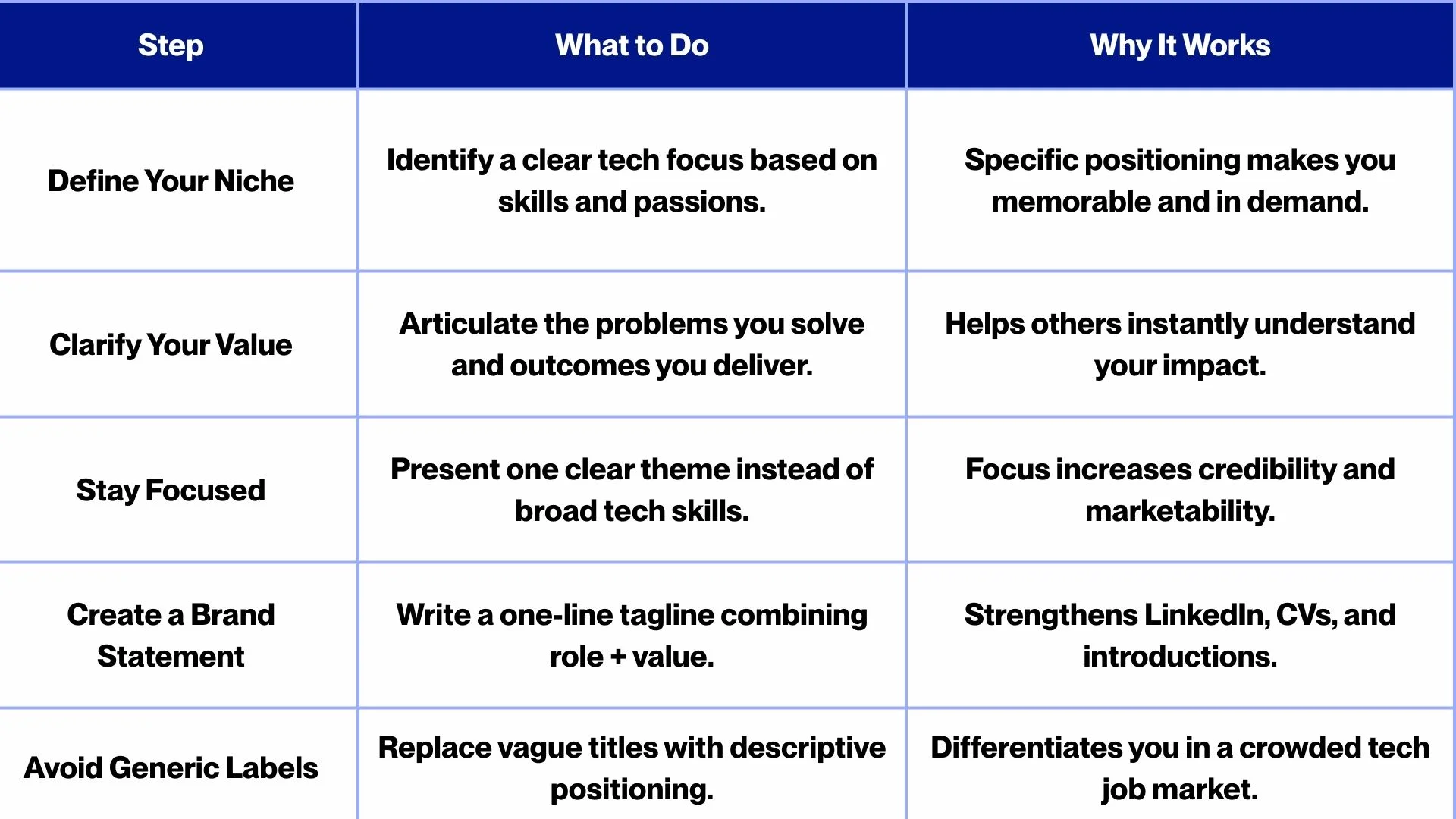
The foundation of tech personal branding is knowing what you want to be known for. Tech is a broad field, so it is important to identify if you are a cybersecurity guru, a data science enthusiast, or a frontend design expert. Identifying your core strengths and passions allows you to find the intersection where you excel. The most memorable personal brands are focused and specific. This does not mean you must pigeonhole yourself into one skill forever, but you should present a clear theme about your expertise right now.
Start by asking what problems you love to solve and which technologies you are most experienced in. You might decide your niche is cloud security for healthcare apps or mobile game design. Having this clarity helps you craft a brand message that sticks. A good tip is to summarize your niche in one sentence. If you cannot do this, it likely isn’t clear enough yet. Clarity guides your efforts and tells others exactly how you stand out.
Consider the difference between a generic and a specific approach. Imagine two early-career IT graduates on LinkedIn. One headline says "IT graduate open to opportunities," while the other brands herself as a "Cybersecurity Graduate passionate about ethical hacking and risk management." The second one leaves a much stronger impression by signaling a unique value proposition. At OhhMyBrand, we often help clients uncover what makes them unique. Embracing a niche might feel like you are limiting yourself, but it actually makes you more marketable in the long run.
Craft a Compelling Personal Branding Statement
Once you know your focus, encapsulate it in a personal branding statement. This is a concise one-liner that describes who you are, what you do, and what makes you different. Think of it as your professional tagline or elevator pitch. A strong statement works everywhere, from your LinkedIn headline to your CV summary.
To write a great statement, keep it simple, clear, and specific. Use words that anyone can understand and aim to highlight the value or outcome of your work. For example, compare a standard title like "Software Engineer" with a more vibrant statement such as "Software Developer | I build e-commerce and web solutions from scratch." The latter showcases a specialty and the ability to build end-to-end solutions. A data analyst might say "Data Analyst | Transforming complex data into actionable business insights." This format of stating your role followed by the value you provide is a very effective formula.
Effective personal branding statement examples include "Frontend Developer | React and UI/UX Enthusiast" or "Cloud Solutions Architect | Helping businesses innovate with secure cloud infrastructure." Each of these is short but packed with information. Avoid jargon or buzzwords that do not carry specific meaning. A personal brand statement should tell people what you do, why it matters, and what makes you unique. Once you have a draft, test it out with a colleague to see if it clearly conveys your professional identity. Your statement can always evolve as your career grows.
Optimize Your Online Profiles (LinkedIn and Beyond)
In tech, your online presence is often the first meeting you have with a professional contact. Personal branding for tech professionals almost always begins on LinkedIn because recruiters, clients, and managers are constantly searching the platform. It is essential to ensure your profile does justice to your brand.
Professional Photo and Headline
Your photo should be a clear, friendly headshot. You do not need a professional photographer; a well-lit photo from your phone works well. Aim for a clean background and a smile, as approachable faces are often viewed as more competent. For tech roles, you can keep it casual-professional. There is no need for a suit if that is not your style, but you should look put-together.
The headline is prime real estate under your name and should be more than just your job title. Use your personal branding statement here. For example, instead of "IT Professional at XYZ Corp," you could use "IT Project Manager | Turning complex software projects into streamlined solutions." A clear, specific headline immediately tells visitors who you are and makes you much more searchable to the right people.
About Summary and Skills
The "About" section is your chance to tell a story rather than just listing skills. Write a short paragraph that highlights your key accomplishments and what you are passionate about. Using a first-person perspective can make the summary feel more personal. You might mention a specific project you are proud of or a unique career journey, such as transitioning from engineering to software. If you contribute to open-source projects or volunteer, include those details to make yourself more memorable.
Keep your experience and skills sections up to date. For tech roles, listing relevant programming languages, tools, and certifications is vital. Endorsements and recommendations also add credibility. Do not hesitate to request a recommendation from a colleague or manager you have worked with closely, as recruiters value these genuine testimonials.
Beyond LinkedIn
Consider other platforms depending on your specific field. GitHub is crucial for software developers because it serves as a portfolio of your code. An active, well-organized GitHub profile with clear README files can set you apart. If your profile is out of date, it is better to tidy it up before sharing it. For designers, platforms like Dribbble or Behance are excellent for showcasing visual work, while data scientists might use Kaggle.
Consistency across all platforms is important. Your job titles, photos, and messaging should align so that you present a cohesive story. If you are comfortable with it, a personal website can also be a powerful tool. A simple site with your bio and projects gives you full control over your narrative and often ranks high in search results for your name. This acts as a central hub for your brand and helps you stand out as a savvy professional.
Share Knowledge and Engage with the Tech Community
Now that your profiles are polished, it is time to get active. Personal branding for technology professionals grows through regular engagement. This does not mean you must post every day; it means you should contribute to discussions and share value periodically so that people see signs of life behind your profile.
Share Your Learning and Create Content
A great strategy is to share your learning journey. You do not have to be an expert to post online. Some of the best personal brands belong to people who openly discuss new things they are picking up. For example, if you just learned a new JavaScript framework, you could write a short post about what you found challenging. These updates demonstrate a growth mindset and highlight your skill set. Employers value candidates who are passionate and continuously improving.
Depending on your comfort level, consider creating or curating content that is helpful to others. This could be a how-to article, a short tutorial video, or simply a comment on industry news. If writing long articles feels daunting, start small by sharing an insightful piece you read and adding your perspective. Before posting, ask yourself if your audience will get something out of it. Valuable content is remembered and reshared, which naturally extends your professional reach.
Engage with the Community
Personal branding is not just about broadcasting your own thoughts; it is also about interacting with others. Reply to questions on Stack Overflow, leave thoughtful comments on LinkedIn updates, or congratulate a connection on a new launch. These small interactions put you on people's radar in a positive way. The most robust brands belong to those who participate in conversations rather than just pushing self-promotion.
Beyond general platforms, join communities specific to your niche, such as subreddits, Discord servers, or Slack groups. Being active in these spaces cements your brand among your peers. Similarly, attend industry events or webinars and share your takeaways. Even a simple post about what you learned at a conference shows you are plugged into the industry. Mentoring others or volunteering your tech skills is another powerful way to build your brand while helping the community. These activities demonstrate leadership and often lead to genuine professional advocates.
Showcase Your Projects and Achievements
Tech professionals build things, and these creations should be a core part of your brand. Showcasing your work allows others to see your skills in action, which is often more persuasive than simply listing them on a resume.
Build a Portfolio
Treat your projects like portfolio pieces. If you are a developer, pin your best repositories on GitHub. If you are a data scientist, use a simple site to show your data visualizations. For project managers, personal branding case studies of successful implementations can serve as evidence of your expertise. Having tangible proof of your work makes your claims credible. Even if your professional work is proprietary, you can share open-source contributions, hackathon entries, or personal side projects.
Highlighting certifications, awards, or patents also adds significant credibility. These act as trust badges for your expertise. Additionally, incorporate social proof such as LinkedIn recommendations or testimonials from clients. These validations differentiate you from others and substantiate your strengths. At OhhMyBrand, we encourage professionals to maintain a record of these achievements to use when new opportunities arise.
Show Your Process
Another way to showcase work is by sharing your process. Writing about how you improved a team's database performance or the lessons learned from building an app demonstrates your problem-solving approach. This positions you as a thoughtful practitioner. Make it a habit to update your portfolio whenever you reach a milestone, treating your brand as a live project that you iterate on over time.
Always respect confidentiality and company policies when sharing work. Frame your achievements in terms of outcomes and learnings rather than proprietary details. It is usually acceptable to describe the impact of your work, such as reducing deployment time, without disclosing sensitive code. When you showcase your achievements boldly and honestly, you transform from a name on a resume into a proven contributor with visible results.
Be Authentic and Consistent (Stay True to You)
Two non-negotiables of personal branding are authenticity and consistency. These elements serve as the glue that holds your professional identity together and makes it credible to others.
Authenticity
Simply put, be real. Your personal brand should reflect your genuine interests, values, and style. While the tech industry values innovation, it increasingly prioritizes culture fit and passion. Successful brands are not built on a manufactured persona; they showcase real strengths. If you have a specific passion, such as web accessibility or a particular hobby, let it show. People connect with humans rather than corporate robots.
Being authentic also means being honest about your abilities. In tech, it is usually obvious if someone is bluffing, and overhyping skills can backfire. It is far better to acknowledge what you are currently learning. Sharing a challenge you overcame or a bug that taught you a lesson shows confidence and realness. If you are new to a field, frame your brand around your transition and your willingness to learn rather than trying to sound like a seasoned pro on day one.
Consistency
Consistency is about reliability in your message, tone, and frequency. A personal brand is the result of small, consistent actions over time. Once you have decided on your core message, stick with it. Use the same professional name or handle across platforms and use a consistent photo or style. Anyone who encounters you in different contexts should get a cohesive sense of who you are.
Consistency also applies to how often you engage. You do not have to post every day, but you should show up regularly. Find a sustainable rhythm, such as one post a month or a few comments a week, so your profiles do not go dormant. An outdated blog or a silent social media account can signal a lack of follow-through. It is better to be consistently present in one or two places than to be everywhere inconsistently.
Evolve and Stay Positive
Maintain a tone that is positive and professional. While the tech community appreciates candor and constructive discussions about technical pain points, avoid excessive negativity or attacking others. Your brand should represent a person others want on their team. Showing kindness and a growth mindset will enhance your reputation more than winning an online argument.
Consistency does not mean rigidity. It is expected that your interests or career will shift over time. You can gradually steer your brand in a new direction by adding new projects and shifting your topics of conversation. Your personal brand is a journey that grows as you do, provided your messaging remains aligned and intentional. Authenticity and consistency build trust, which is the ultimate strength of a personal brand.
Personal Branding in Tech: Personal Brand Strategy Examples and Inspiration
It is helpful to see what good personal branding looks like in action. Exploring technology branding examples can illustrate how different professionals successfully build their reputations.
High Profile Examples
Elon Musk exemplifies the power of a public personal brand in technology. He is known for a futuristic vision and direct engagement on social media. His presence on platforms like X is an extension of his brand: innovative and direct. While he operates on a global scale, the core lesson is that a clear and distinctive persona makes a brand memorable. By being vocal about his missions in space, electric cars, and AI, he aligns his personal narrative with his professional goals. Most professionals will not be global celebrities, but they can still learn to be bold about their tech passions and interact with their community to build influence.
Individual Brand Statements
Personal branding statements are the most direct way to signal your identity. For instance, a statement like "Freelance UX Designer | Helping startups turn complex ideas into beautiful interfaces" is effective because it identifies the role, the target audience, and the specific value provided. Another example is "DevOps Engineer | Automating workflows so teams can innovate faster," which highlights a niche and the benefit of that person's work. These statements should feel unique to you rather than like a generic template.
Community Presence
Personal branding can also be built quietly through niche communities. Consider a software developer who is highly respected on Stack Overflow. By consistently providing helpful answers, they become known as an expert in their domain. This reputation often leads to job offers or speaking invitations. Many tech leaders, such as the creators of Linux or Python, started by sharing their work with the community. Their consistent contributions eventually made them legendary. You do not have to create a new programming language to benefit; even maintaining a small open source project or writing a technical blog series can earn significant recognition.
Success in Practice
To illustrate the impact of these efforts, imagine a mid-level developer who decides to intentionally build her brand. After revamping her LinkedIn, posting monthly about her learnings in AI, and giving a talk at a virtual conference, her visibility increases. Eventually, these efforts catch the eye of a startup founder who is impressed by her expertise and passion. This can lead to job opportunities that are never publicly advertised. When tech professionals invest in their brand, they shift from searching for opportunities to having opportunities come to them.
Conclusion: Start Building Your Tech Brand Today
Personal branding for tech and IT professionals is not a vanity exercise; it is an essential part of career development. You have complete control over your professional identity. It is an ongoing project that starts now and grows with every step you take.
Key Takeaways for Success
First, be clear about your niche and strengths. Do not try to be everything to everyone. Focus on what you want to be known for and highlight that specific expertise. Once you have that focus, articulate your value through a personal brand statement or tagline that tells your story at a glance. Use this consistently across all your profiles.
Next, polish your online presence. Ensure LinkedIn and other relevant platforms like GitHub are optimized with professional details and a touch of personality. Since first impressions count online, make sure your profiles work for you. Stay active by sharing, posting, and networking at a sustainable pace. Every interaction is a building block for your reputation.
Finally, show what you have done. Let your projects, code, and certifications speak for your abilities, as people trust results more than claims. Above all, be genuine and consistent. Authenticity builds the trust necessary for a long-term career. Be the same professional online as you are offline and maintain your presence regularly.
Your Career Marketing Campaign
The journey might feel slow initially, but every new connection or recruiter message is proof that your brand is gaining traction. Tech professionals often focus so heavily on technical skills that they neglect self-marketing. Think of personal branding as a marketing campaign based entirely on showcasing your best, most authentic self.
No matter where you are in your career, start building your brand today. Implementing even a few of these strategies will put you ahead of many peers. In a rapidly evolving industry, your personal brand is your constant. It is the reputation that follows you from job to job and project to project. Invest in it, nurture it, and let it amplify your technical work. By leading with a strong brand, you will not just keep up with the industry; you will confidently direct your own career path. Contact OhhMyBrand today to learn more about how to transform your name into a brand that opens doors. Let’s work together to make you not only visible but unforgettable in your field.


.svg)
.svg)
.svg)
.svg)



.svg)